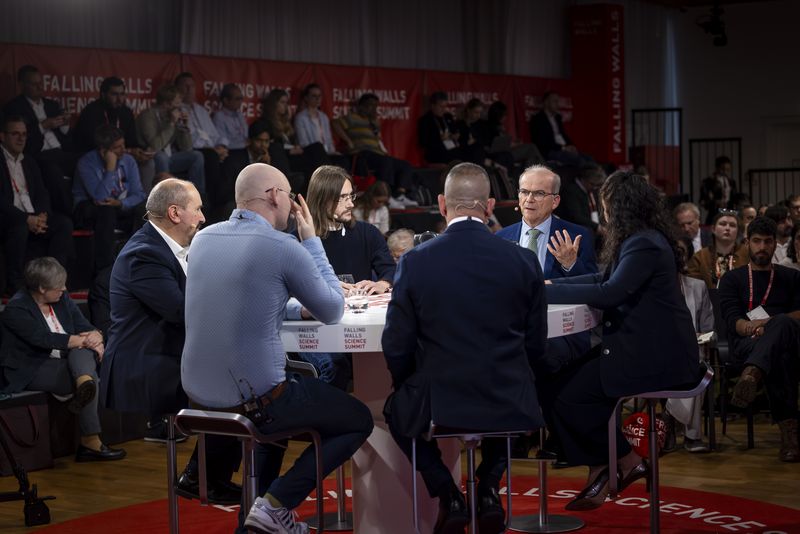
The conversation covered the route from research to commercialisation, the role of software and of government, and the part ecosystems play in bringing all of this together. A central theme for MQV was the importance of establishing and enabling integrated technological and innovation ecosystems, in which different partners develop and commercialise quantum computing together. This is also tracks well with the route the Hightech Agenda Deutschland is taking with its consortia project approach in the Quantum Computing Competition.
Additionally, different commercialisation efforts may need different kinds of support: alongside growth capital for start-ups, essential suppliers and component makers often need partners for co-development and de-risking. On software, open source communities help convergence around standards that benefit both hardware providers and users, and that give software developers a common foundation to build on. That leading players, including Classiq, actively engage in such open source community efforts, as supported by MQV, shows the value the field sees in this approach.
For these purposes, the MQV gGmbH will serve as a system enabler for start-ups, industry and research: facilitating joint initiatives and access to quantum computers, co-developing and de-risking projects with partners through its technical teams, and actively mapping and removing roadblocks to commercialisation.
Many thanks to Quantum Valley Lower Saxony and the Falling Walls Foundation for bringing everyone together, to Naz Pourmalek for the moderation, and to our fellow panellists for sharing their perspectives.